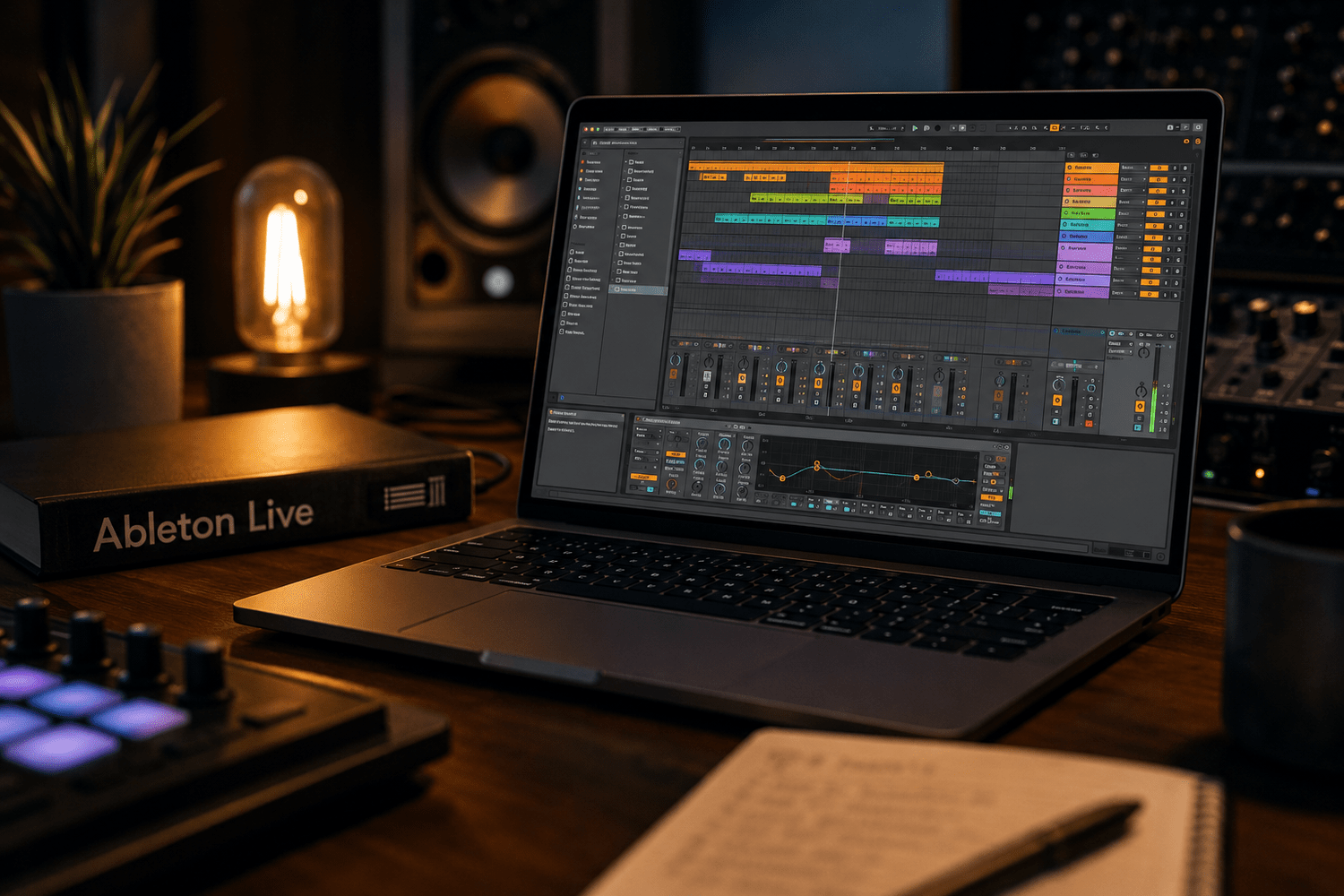
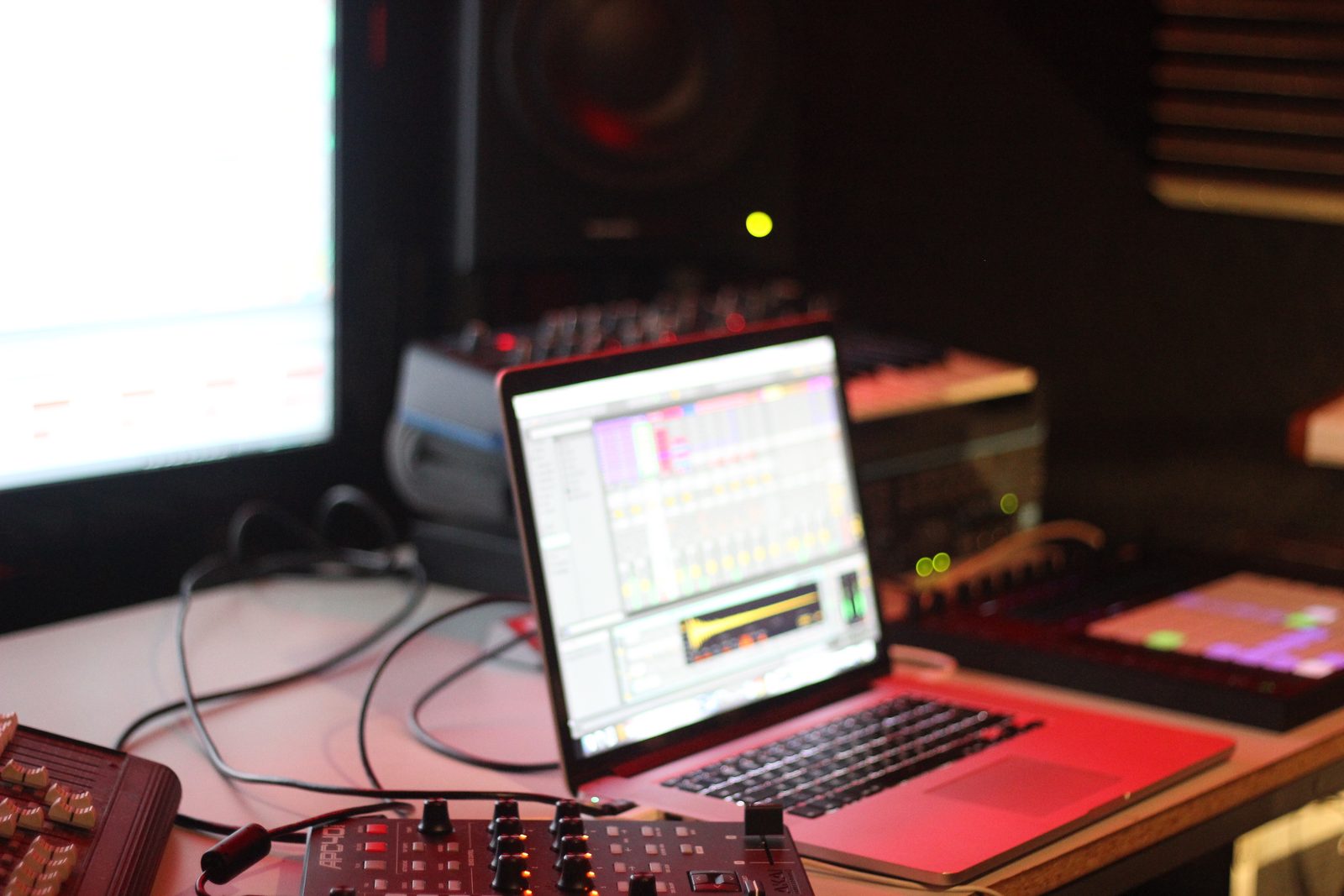
Most people who come to me for lessons think they know what's ahead. They want to make a tune, and they've usually got some of the basics already: they can load a drum loop, find a synth preset, maybe get eight bars going. Fair enough. That's how everyone starts.
But very few realise what making a tune actually involves. It's usually once we start working through things properly that it lands: music production isn't one skill. It's a dozen or so subjects, all connected to each other, like any other modern art or skill. Photography is the same. The camera, the light, composition and editing are separate subjects, but a good photo needs all of them at once. In production, the sounds you choose shape everything that comes after them. The drums you pick decide how you'll process them. The sounds you load in often dictate where the arrangement goes. Change one early decision and everything downstream moves with it.
YouTube doesn't help, because it teaches every subject in isolation. You'll find thousands of tutorials on sidechain compression, wavetable synthesis and mastering, each one on its own, with nothing to tell you how they connect or which ones matter yet. It's like taking every recipe in a cookbook, tearing them all up, jumbling the pieces together, and then being asked to cook one specific dish.
So this is the map I use. I've been teaching Ableton Live one to one since 2012, over 11,000 hours of lessons now, and in all that time the shape of it hasn't really changed. What changes is which subjects matter for your music, and how deep you go into each one.
This post covers what music production actually is, the subjects it's made of (which depend on what you make), and the five goals that break it all down into achievable stages. It's a map, not a syllabus. Everyone's route across it is different, and in lessons I build that route around the person in front of me. But it helps to see the whole territory before you start walking.
What is music production, really?
The short answer: everything that happens between an idea and a finished track.
The longer answer needs a bit of history.
For most of the 20th century, making a record took a team. A songwriter wrote it, an arranger decided who played what, musicians performed it, an engineer recorded it, a mix engineer balanced it and a mastering engineer cut it for vinyl. The "producer" oversaw the lot, closer to a creative director than someone with their hands on every fader.
Electronic music blew that up. In Chicago and Detroit in the mid-1980s, a handful of people with drum machines like the Roland TR-808 and TR-909, a TB-303 picked up cheap second-hand, and a four-track tape machine were writing, performing, engineering and mixing records on their own. The producer became the whole team. Then software finished the job. Ableton Live arrived in 2001, and within a few years the entire studio, and every one of those roles, fitted inside a laptop.
That's why production feels so big when you start. You're not learning one skill. You're learning the jobs of six or seven people. The good news is that you don't have to learn them one after another, and you really shouldn't try.
The subjects, and why they change with the genre
There isn't one fixed list. Production is a combination of subjects, and the combination depends on the music you make. Some turn up in every genre: workflow, drums, processing, arrangement and mixing. Others matter enormously in one genre and barely at all in the next.
Techno, for example
Techno is home turf for me, so here's what the list looks like for a techno producer. It's close to the one I sent a techno producer recently who asked what lessons might cover.
- Ableton workflow. How you move around the software: Session View and scenes, recording ideas into Arrangement View, racks and macros, routing and templates. Good workflow is invisible. Bad workflow is the only thing you can think about.
- Drums and groove. Choosing a kick, layering and tuning it, how the kick and bass share the low end, beat variations, swing, percussion and fills. In techno the drums aren't the backing. They're the track.
- Processing. EQ and compression (including sidechain, parallel and bus compression), saturation and distortion, transient shaping, clipping and gain staging.
- Sound design. Rumbles, stabs, textures, sampling and resampling, and using effects to create sounds, not just polish them.
- Synthesis. The engines that make sound from nothing: subtractive, FM and wavetable.
- Automation. Changing things over time: filter sweeps, sends, volume, any parameter you can see on screen.
- Modulation. Getting the machine to change things for you, with LFOs, envelopes and modulators.
- Music theory. Keys and scales, tension and release, and the very practical job of tuning your kick and bass so they agree with each other.
- Progressions and arrangement. Energy across a whole track, DJ-friendly intros and outros, structure, and studying reference tracks to see how other people solved the same problems.
- Mixing. Balance, low end, mono, space and depth, and whether it all translates to a club system.
- Release prep. Headroom, pre-masters and stems, and delivering to a label. Mastering itself is a separate discipline, and I treat it as one.
Notice what's light. Theory is there, but mostly in a supporting role: staying in key and building tension, rather than writing chord progressions. Vocals barely appear.
House changes the mix
House, and especially deep, organic and melodic house, brings in subjects a techno producer can mostly skip:
- Melodies and harmonies. Chord progressions, stabs and pads that move with the bass, voicings and counter-melodies. Theory moves from a supporting role to centre stage.
- Vocals and vocal processing. Chopping, pitching and resampling vocal samples, building a vocal chain, and, if you're working with a singer, recording and editing takes. House has leaned on vocals since its earliest days, with gospel and soul running right through the Chicago and New York records.
- Sampling records. Disco, soul, funk and jazz loops, chopped, filtered and flipped until they're yours.
- Groove, which matters even more than it does in techno: shuffled hats, ghost kicks, and claps nudged slightly off the grid.
Every other genre has its own mix
- Minimal is about detail and restraint: micro-edits, subtle modulation, and making a handful of sounds stay interesting for eight minutes.
- Drum and bass brings in chopping and rearranging breakbeats, bass design, and arranging at around 170 BPM, often against a halftime feel.
- Ambient and downtempo lean on texture, space, field recordings and slow evolution, sometimes with no drums at all.
And some cut across every genre
- Critical listening. Pulling reference tracks apart, comparing at equal loudness, and training your ears to hear what's really happening rather than what you expect to hear.
- Playing MIDI. Playing parts in on a keyboard or a Push rather than drawing every note, with velocity and timing that feel human, and MPE if your controller supports it.
- Hardware. Getting drum machines, synths, controllers and a Push talking to Ableton, so you can jam with them rather than just look at them.
- Recording. Synths, hardware, instruments, voices and field recordings, captured properly.
- DJing. How your tracks work in a mix, and how playing other people's music feeds back into your own.
- Live performance. Turning your tracks into something you can play, in Session View or on hardware.
So when I say production is a dozen or so subjects, I mean it loosely. A techno producer and a deep house producer share most of the list, but not all of it, and they go deep in different places. My lessons follow whichever list is yours.
Sound design and synthesis are separate on purpose. Synthesis is one way of making sounds. Sound design is the bigger job of getting the right sound for the track, which might mean a synth, a field recording, a resampled vocal or a hi-hat run through three delays and a distortion. Plenty of brilliant sound designers barely touch a synth.
The map isn't the problem. The order is.
Having the subjects laid out like this is a good way to learn. You can see what's there, and you can work through each one properly.
The problem for most people is knowing what to learn next. Not the order in general, but the right order for them: the most logical next step, given the music they make and where they are right now. Without that, it's very easy to get bogged down in information that's perfectly good, but irrelevant for now. Wavetable synthesis is a brilliant subject. It's just not much use to someone who can't yet turn a loop into a track.
That's what a customised course deals with. I look at where you are, what you're making and what's in your way, and we work out the next logical step. Then the one after that.
The five goals
Those subjects are a lot to take in at once, so I break them down into five goals. Each one is achievable in its own right, and each one gives you a clear idea of what you're aiming for right now, and what can wait.
| Goal | What you're aiming for | The focus |
|---|---|---|
| 1. Make a loop | Get through the initial learning curve and start having fun in Ableton | Enough Ableton to get a loop going |
| 2. Make a full track | Make a complete track in Ableton, start to finish | Every stage, at a base level |
| 3. Go deeper | Take the core subjects to a more advanced level | The subjects from goal 2, in depth |
| 4. Your own sound | Sculpt exactly the sounds you want, so your music sounds like you | Sound design and synthesis, in depth |
| 5. Continuous development | Keep developing as an artist, with no finish line | Your taste, your sound over time, releasing music |
Goal 1: Make a loop
The first goal is getting a loop going in Ableton. That sounds small, but the real aim is bigger: breaking through the initial learning curve so you start having fun in Ableton.
At first, Ableton can feel like a wall of buttons. One of my students said he'd been "literally scared of the german spreadsheet looking Ableton" before we started. Once you can get a loop going, things finally start to feel enjoyable. This is the point where most new producers come to me.
It's a big moment, but it's the first goal, not the last. There are more levels to get through before you're making full tracks, let alone tracks you like.
Where are you on the map? - Can you open Ableton and get a loop going without following a tutorial step by step? - Can you get a beat and a bassline playing together? - Does making music in Ableton feel fun yet, or still like a fight?
Goal 2: Make a full track
Once you're having fun with loops, the next goal is learning how to make a full track in Ableton.
That means getting a base level in every stage of the process, from the first sounds to the arrangement and a rough mix. It doesn't mean making it sound like a record you love. Don't get bogged down in quality, and don't compare your tracks to other people's releases. You're not there yet, and that's fine. Nobody is at this stage.
What you do get is the bigger picture. Once you know, at a basic level, what every stage involves, you've got a map and a compass. Everything you learn after that has somewhere to go, and the whole process gets easier because you understand how the pieces fit together.
Where are you on the map? - Can you get from a blank session to a full track, start to finish? - Do you know what each stage of a track involves, even if you can't do all of it well yet? - Are you finishing tracks, rather than restarting the same loop?
Goal 3: Go deeper
Goal 3 takes the subjects you learned at a basic level and goes deeper into each one, to a more advanced level.
This is the part a lot of people never get to, and in 2026 it's what divides the pros from the part-timers. Everyone has access to the same software. The difference is how deep your knowledge and abilities go, subject by subject.
Where are you on the map? - Can you make full tracks comfortably, without the basics slowing you down? - Is there a subject you still avoid or skip over, because you only know the basics? - Do you understand why you're doing things, not just how?
Goal 4: Your own sound
Goal 4 is where your own sound comes from, and the key to it is a deeper understanding of sound design. Sound design is the master key. It's what lets you sculpt exactly what you want with a synthesiser, rather than scrolling through presets hoping one of them is close enough.
Where are you on the map? - When you hear a sound in your head, can you build it from scratch? - Do you understand what each part of a synth is doing to the sound? - Is your sound starting to be recognisably yours?
Goal 5: Continuous development
There's no finish line here. Goal 5 is ongoing artistic development: refining your sound and your taste, and releasing music over years rather than weeks. It's why some of my students have been with me for over ten years.
Where are you on the map? - Are you releasing music, or making music you'd be happy to release? - Do you know what you want your sound to become next?
How deep each subject goes
Just as production as a whole has goals, each subject has levels of its own: how deep you can go into it. You might be at level 3 for drums and level 1 for mixing, and that's normal. Here's what those levels look like for the techno list, from a first working knowledge through to the kind of depth that takes years. Read across a row to see how one subject deepens.
| Subject | Level 1 | Level 2 | Level 3 | Level 4 |
|---|---|---|---|---|
| Ableton workflow | Session View jamming, scenes, recording into Arrangement, organised files | Racks and macros on your own sounds, saved presets, default track templates | Routing and resampling, custom templates and rack libraries that make your sound repeatable | A setup so fast it disappears, refined over years |
| Drums and groove | Kick choice, main and secondary hits, velocity, swing and the Groove Pool | Layering and tuning drums, shaping them with envelopes and effects, fills and variations | Designing your own kicks and percussion, kick and bass treated as one system | A groove people recognise as yours |
| Processing | Compressor and EQ on every sound, low cuts, sidechain, basic gain staging | Saturation, distortion, parallel and bus compression, transient shaping | Your own processing racks, clipping, a low end that holds up on a big system | Taste: knowing what a sound needs, including nothing |
| Sound design | Choosing the right sample or preset, and knowing why it fits | Effects as sound design, basic resampling | Rumbles, stabs and textures from scratch, building your own palette | A palette that keeps evolving with your music |
| Synthesis | Envelopes on samples in Simpler, light preset tweaking | Subtractive basics: oscillators, filters, envelopes, LFOs | FM, wavetable and more, and sampling as synthesis | Picking the right engine for the idea, without thinking about it |
| Automation | Filter sweeps, mutes and volume changes to build an arrangement | Automating effects and sound parameters for movement | Long, evolving changes that do the work of the arrangement | Movement and detail as part of your signature |
| Modulation | An LFO on a filter, so something moves without you touching it | LFOs and envelopes inside your synths | Modulation routed through racks and macros | Controlled unpredictability that keeps long tracks alive |
| Music theory | Keys and scales, bass lines in key, tuning your samples | Stabs, pads and chords that follow the bass | Tension and release, harmony across every layer | Your own harmonic language |
| Arrangement | Intro, main sections, break and outro: loop to full track | Energy across the track, DJ-friendly intros and outros | Studying references, arrangement as a journey for the dancefloor | Pacing a whole EP or album, not just one track |
| Mixing | A rough mix: balance, mono low end, panning, reverb on returns | Space and depth, bus processing, references at equal loudness | Translation: mixes that work on club systems as well as headphones | Consistency across a body of work |
| Release prep | Clean exports and sensible headroom | Gain staging that leaves room for mastering | Bouncing clean stems and pre-masters | Label delivery and working with a mastering engineer |
For a house producer, you'd add rows like these:
| Subject | Level 1 | Level 2 | Level 3 | Level 4 |
|---|---|---|---|---|
| Melodies and harmonies | A bass line and a stab in the same key, with the stab mirroring the bass | Chord progressions, and pads and stabs that move with the bass | Richer chords, voicings and counter-melodies, with tension and release across the track | Your own harmonic language |
| Vocals and vocal processing | A vocal sample warped to tempo and sat in the mix with EQ and reverb | Chopping, pitching and resampling vocals into new parts | A full vocal chain, and recording and editing a singer | Vocals as part of your signature, and producing other artists |
Your route is your own
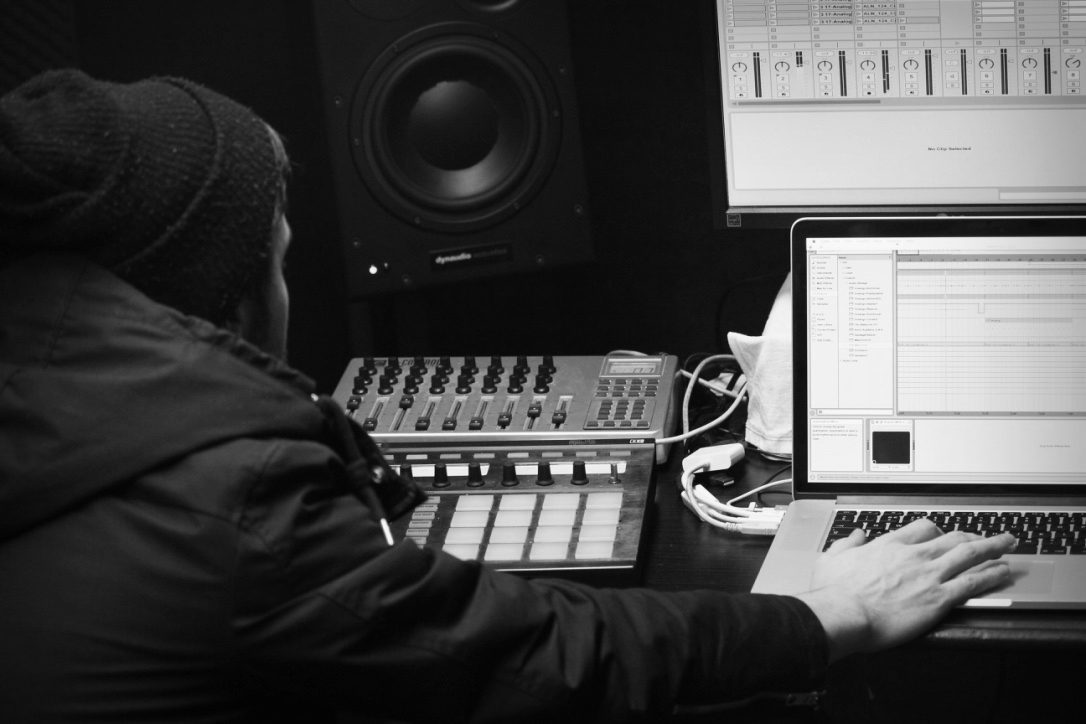
The goals are the same for everyone. The route through them isn't.
A DJ, a classically trained musician and someone with a room full of hardware all arrive with different strengths, different gaps and different music in their heads. They need different lessons, in a different order.
That's why my lessons are built around the person, not a fixed course. The goals tell us where you are and what's next. What we actually do in a given lesson depends on you, your music and what's in your way right now.
How long does it take, and how does it feel?
Two questions this post doesn't try to answer, because they've got their own:
- How long? I go through realistic timelines in How Long Does It Really Take to Learn Music Production?
- How does it feel? Music Production Is Like an Onion is about the other side of learning: the plateaus, the perfectionism, and why the layers keep revealing more.
Where to go next
Some guides that go deeper on parts of the map.
Goal 1: Make a loop
- How to Learn Ableton Live in 2026: A Realistic Roadmap
- Music Production for Beginners: 25 Essential Terms You Need to Know
Not sure where you are on the map?
That's what the first session is for. Book a free session, play me something you've made, and I'll tell you honestly where you are and what I'd work on next. If lessons make sense after that, have a look at my online Ableton Live lessons.
FAQ
What is music production?
Music production is everything between an idea and a finished track: writing, choosing and designing sounds, programming drums, arranging, processing, mixing and preparing the track for release. In electronic music, one person usually does all of it.
What are the stages of music production?
There are two ways to answer. The stages of making one track run from idea and sound selection, through writing and arrangement, to mixing and release prep. The stages of learning it are different. I break those into five goals: make a loop, make a full track, go deeper into the core subjects, find your own sound, and continuous development.
What music production skills do you need?
It depends on the genre. Most electronic music needs Ableton workflow, drums and groove, processing, sound design, synthesis, automation, modulation, music theory, arrangement, mixing and release prep. House adds melodies, harmonies and vocals. Drum and bass adds breakbeat editing and bass design. You need a working knowledge of the ones your music uses to finish a track, then you go deeper into each.
What should I learn first in music production?
First, get through the initial learning curve: learn enough Ableton to get a loop going, so it starts to feel fun. Then learn how to make a full track, with a base level in every stage. Don't worry about quality yet, and don't compare your tracks to other people's releases. Knowing what every stage involves gives you the bigger picture, and that makes everything you learn afterwards easier.
Do I need to learn synthesis to make techno or house?
Not to start. Deep sound design comes later in the way I teach, once you can make full tracks and have gone deeper into the core subjects. When you get there, it's the key to sculpting exactly the sounds you want, and to finding your own sound.
Is mastering part of music production?
It's part of releasing music, but it's a separate discipline. As a producer, your job is to hand over a well-balanced mix with sensible headroom, or clean stems and a pre-master, so a mastering engineer has something good to work with.